Equipment Comparison · November 20, 2026
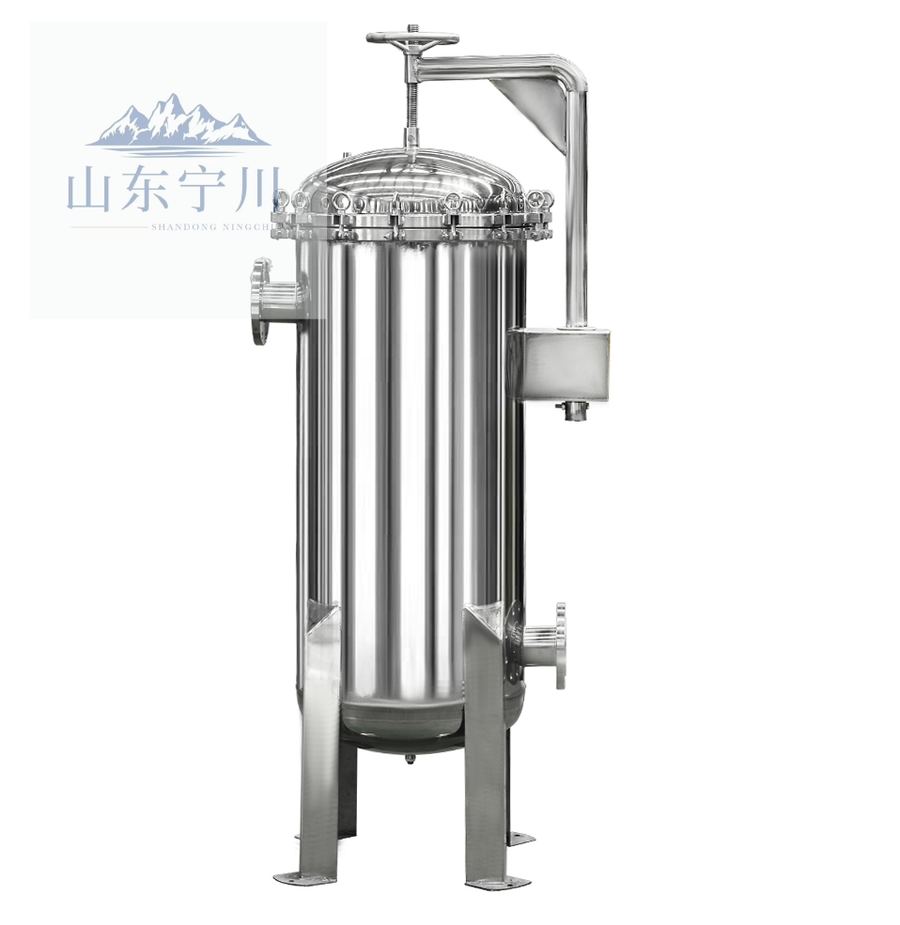
A single bag filter housing is the cheapest way to put liquid filtration into a line - one vessel, one bag, one swing-bolt cover, done. It works so well that many buyers keep buying singles as their flow grows, then wonder why they are changing bags every shift and paying operators to babysit them. The multi-bag housing is the natural answer, but stepping up too early wastes money too. This guide draws the line between the two with the same flow figures our engineers use on enquiries.
A single bag housing holds one filter bag - either a #1 bag (φ180 x 430 mm) or the taller #2 bag (φ180 x 810 mm) - inside a stainless steel vessel with a hinged or swing-bolt cover. One inlet, one outlet, one basket, one bag. Changing it takes minutes: release the clamp, lift the cover, swap the bag, close.
A multi-bag housing holds several #2 bags side by side in one pressure vessel - typically 2, 4, 6, 8, 12 or more. The bags sit in a shared basket frame; the flow divides evenly across them. The vessel is bigger, but one housing replaces a bank of parallel singles: less pipework, fewer valves, less floor space and one cover to open instead of five.
| Vessel | Bags inside | Recommended flow (water, ambient) | Maximum flow |
|---|---|---|---|
| Single, #1 bag | 1 x φ180 x 430 mm | up to 8 m³/h | 12 m³/h |
| Single, #2 bag | 1 x φ180 x 810 mm | up to 16 m³/h | 25 m³/h |
| 2-bag housing | 2 x #2 | up to 32 m³/h | 50 m³/h |
| 4-bag housing | 4 x #2 | up to 64 m³/h | 100 m³/h |
| 6-bag housing | 6 x #2 | up to 96 m³/h | 150 m³/h |
| 8-bag housing | 8 x #2 | up to 128 m³/h | 200 m³/h |
Design at 60 - 80% of the maximum and the clean pressure drop stays near 0.03 MPa, so each bag reaches its full dirt-holding capacity before it blinds. Two corrections: for viscous liquids (syrup, oil, glycerine) divide the figures by 2 to 3, and for high temperature check the seal material - Viton instead of EPDM above about 80 °C.
The honest threshold from our enquiries: when flow exceeds about 20 - 25 m³/h, or when change-outs would interrupt production. Below that, a single vessel (or two singles in parallel) is more economical. Beyond it, the multi-bag wins on four counts:
| Plant flow | Our usual recommendation | Why |
|---|---|---|
| up to 10 m³/h | Single #1 or single #2 | Lowest cost, simple change-out |
| 10 - 25 m³/h | Single #2, or 2-bag if solids are heavy | Stays inside the gentle-duty window |
| 25 - 60 m³/h | 2-bag or 4-bag housing | Bag life and change-out both stay reasonable |
| 60 - 150 m³/h | 4-bag or 6-bag housing | One vessel replaces a bank of singles |
| above 150 m³/h | 8-bag housing, or multi-bag in duplex | Capacity plus continuous-duty insurance |
Compare a 40 m³/h plant with two options. A single #2 vessel at 40 m³/h runs at its maximum rating: clean pressure drop is higher, the bag blinds early, and at a medium solids load you might change it twice a week - and every change stops the flow. A 4-bag vessel at the same 40 m³/h runs each bag at 10 m³/h, well inside the recommended window: pressure drop stays low, bag life stretches, and because bags can be swapped one at a time there is no interruption at all. The 4-bag vessel costs more on the purchase order and less every week thereafter.
The pressure-drop rule makes the decision measurable: change bags at 0.10 - 0.15 MPa (15 - 22 PSI) differential. If a single-bag vessel hits that within days while the same bag in a multi-bag vessel lasts two weeks, the housing is undersized - the bags are not the problem.
Some lines simply cannot pause - cooling loops, bottling lines, continuous chemical feeds. Two options: a multi-bag vessel where staged bag changes keep part of the capacity online, or a duplex arrangement - two vessels (single or multi-bag) with changeover valves, so one filters while the other is opened, changed and rinsed. Duplexing two single vessels is often cheaper than one large multi-bag vessel below about 30 m³/h, and it gives true zero-downtime change-out. Above that, a duplex pair of multi-bag vessels is the standard industrial answer.
| Mistake | Consequence | Fix |
|---|---|---|
| Running a single #2 bag at its 25 m³/h maximum continuously | High clean pressure drop, bags blind early, weekly change-outs | Size at 60 - 80% of maximum, or step up a vessel class |
| Adding more single vessels in parallel as flow grows | Pipework, valves and floor space multiply; four covers to open | Replace the bank with one multi-bag vessel |
| Choosing multi-bag for a 10 m³/h batch process | Paid for capacity that never runs; bags age in place | Match vessel to duty, not to "bigger is safer" |
| No viscosity correction on syrup or oil duty | Vessel starves flow; pressure alarms from day one | Divide flow figures by 2 - 3 for viscous liquids |
| Sizing on the bag datasheet alone | Vessel nozzles and basket area mismatched | Size the housing and the bag together - see our bag filter housing sizing guide |
We manufacture the whole bag line in our own workshop: single bag filter housings, high-flow multi-bag housings in 2 to 8-bag and larger configurations, and the filter bags that go inside them - so vessel, basket and bags arrive matched. If the application is closer to fine prefiltration than to bag duty, compare our bag filter housings against the precision multi-cartridge filter in the bag vs cartridge comparison.
Send us the flow, the liquid and the micron rating, and we will size the vessel free of charge - usually within one working day, with the single and multi-bag options priced side by side so the step-up decision is a number, not a guess.
Related products: single bag filter housings · high-flow multi bag filter housings · bag filter housing overview · bag filter housing sizing guide