Sizing & Selection · November 16, 2026
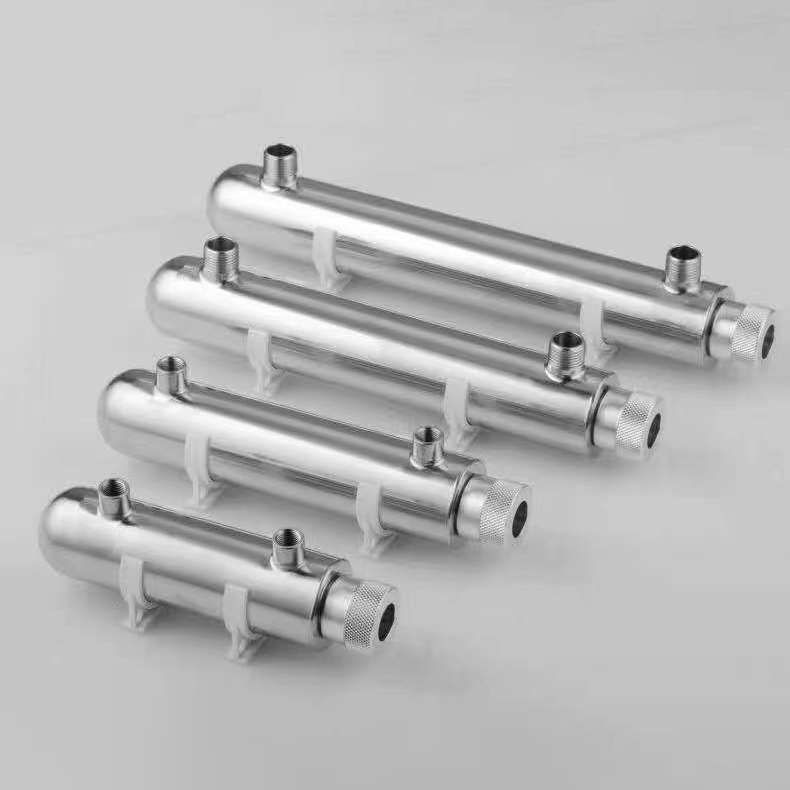
Ask three suppliers to quote a "precision filter" and you will get three different housings - because the word describes a job, not a product. What the RO skid, the UV unit and the filling machine all need is the same thing: a stainless steel housing that holds several standard cartridges in parallel and forces the water through them evenly, at a pressure drop you can monitor.
Size that housing right and the expensive equipment downstream lives its full service life. Size it wrong and you buy cartridges monthly, watch differential pressure climb every week, or starve the RO feed pump. This guide walks through the four decisions that matter: element count, housing length, micron rating and material.
One cartridge is a consumable; a housing full of them is a pressure vessel with a duty. The vessel has to:
That is why the housing is not a commodity add-on to the cartridge order. See our precision (cartridge) filter housings for the range - from compact 3-round designs to multi-round vessels for larger skids.
The working rule: size each element to about half of its nominal flow capability, so the bank runs at low pressure drop and survives feed-water spikes. Typical figures per 40-inch (40") element:
| Element type | Nominal flow per 40" element | Design flow per element |
|---|---|---|
| PP melt blown, 1-5 um | 1.0-1.5 m3/h | 0.6-0.8 m3/h |
| Pleated PP / PES membrane | 1.5-2.5 m3/h | 1.0-1.3 m3/h |
| Sintered SS cartridge | 1.5-2.0 m3/h | 0.8-1.0 m3/h |
| 40" high flow element | 20-50 m3/h | 12-25 m3/h |
Worked example: a 20 m3/h RO skid with a 5 um melt-blown guard filter needs 20 / 0.7 = about 28 elements - that is a 7-round x 40-inch vessel at four elements per round, or a 5-round 40-inch bank with pleated elements instead. The same skid protected by two 40-inch high-flow elements fits a compact 2-round housing. Element count decides the vessel diameter; element length decides the height.
For flows above roughly 40 m3/h, compare the running cost against 40 inch high flow cartridges before committing to a large multi-round bank - the maths is in our high flow cartridge guide.
The guard filter does not have one right micron rating - it has a right rating per position:
| Position | Recommended rating | Why |
|---|---|---|
| After sand / carbon filters, before softener or UF | 25-50 um | Catches media fines and carrier beads, cheap elements |
| Standard RO guard filter | 5 um | The default that protects the 0.0001 um RO membranes from particle breakthrough |
| High-silt feed, dual guard | 10 um then 5 um | First stage takes the bulk load, second stays clean longer |
| Before UV or electronic rinse | 1 um, absolute pleated | UV needs low turbidity; rinse stages need absolute ratings |
| Final / bottle filling | 0.2-0.45 um absolute | Sterile-grade pleated membrane elements |
Rating types matter as much as the numbers: melt blown elements are nominally rated (most particles above the rating are caught, not all), pleated membrane elements are absolutely rated and can be integrity-tested. Our PP melt blown cartridges, pleated elements and cartridge comparison guide cover the trade-offs in detail.
The housing wets every litre, so the material decision follows the water and the process, not habit:
| Mistake | Consequence | Fix |
|---|---|---|
| Element count sized on housing price | Weekly change-outs, high clean delta-P | Design each element to ~50-60% of nominal flow |
| One 5 um guard doing 30 m3/h on melt blown | Bank clogs in days | Split into dual-stage, or move to high flow elements |
| Absolute rating specified where nominal works | 3-5x the element budget for no benefit | Absolute only before UV, filling or sensitive stages |
| 316L specified for plain municipal RO feed | Paid for corrosion resistance the water does not need | SS304 for industrial duty, 316L for hygiene and chlorides |
| No vent or drain sized in | Air locks skew delta-P; change-outs flood | Specify vent, drain and pressure gauge ports on the vessel |
| Delta-P never logged | Change-outs on emergency, not schedule | Weekly log at fixed flow; change at 1.0-1.5 bar |
We manufacture the housings and supply every element family, so we can match vessel and media in one quote: precision (cartridge) filter housings in SS304 or SS316L from 3-round compact to large multi-round vessels, plus melt blown, pleated and sintered SS elements. For sanitary plants, the pharmaceutical water treatment page shows how guard filters, tanks and membrane housings fit together, and the stainless steel filter housing manufacturer page details materials and test documentation.
Send us the design flow, feed water analysis and target change-out interval, and we will come back with a vessel size, element specification and running-cost comparison between disposable and reusable options.
Related products: precision cartridge filter housings · absolute-rated pleated elements · PP melt blown guard cartridges · SS filter housing manufacturer