Equipment Basics · November 18, 2026
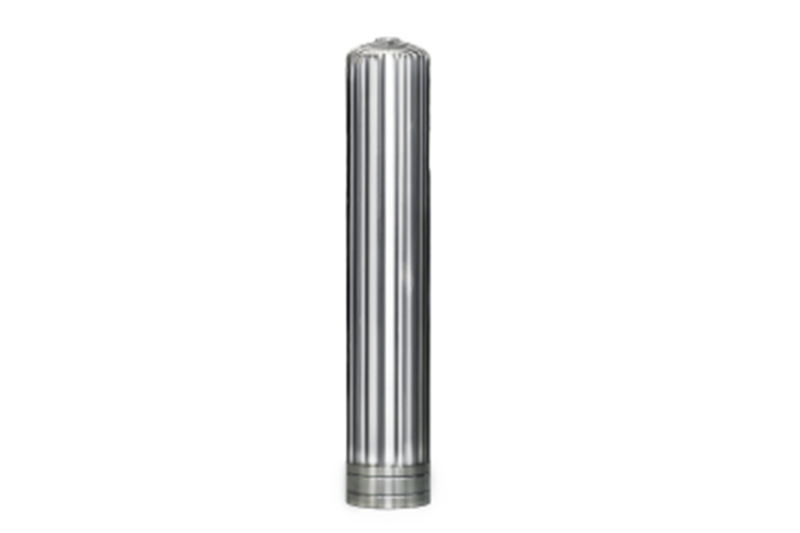
Walk down the consumables aisle of any water treatment plant and you will see mostly polymer: PP melt blown, pleated PES, nylon, hydrophilic PTFE. They are cheap, they come in tight absolute ratings, and when they clog you throw them away. So why does every chemical, food and pharmaceutical plant also keep a box of sintered stainless steel filter cartridges on the shelf?
Because there is a band of duties where polymer elements fail in weeks - or are simply not allowed at all. This guide explains how sintered SS elements are made, what the micron grades really mean, where they beat polymer decisively, and how to clean and reuse them so the higher purchase price pays for itself.
A sintered SS cartridge starts as graded stainless powder or spheres. The powder is packed into shape and heated to just below melting point, so the particles fuse at their contact points and leave a controlled network of interconnected pores. Filtration happens through the whole wall thickness, not just a surface layer like a pleated membrane.
Two consequences buyers should know:
| Grade | Typical use | Notes |
|---|---|---|
| 30 - 60 micron | Protecting pumps and nozzles, condensate and steam condensate polishing | High flow, coarse guard duty, easy backwash |
| 10 - 20 micron | Process liquids, solvent recovery, hot CIP loops, catalyst recovery | Workhorse grades for chemical and food plants |
| 3 - 5 micron | Fine polishing ahead of RO or cartridge stages, beverage and syrup filtration | Most common replacement grade for polymer elements in hot duty |
| 1 - 2 micron | Fine chemical polishing, gas filtration, clarification where membrane cost is prohibitive | Higher pressure drop; validate flow per element |
Our sintered SS filter cartridges are offered in SS304 and SS316L, in 10 / 20 / 30 / 40 inch lengths to fit standard multi-cartridge housings, with the common end-cap adapters.
Be honest in both directions. For cold, clean water duties - RO guard filtration, potable polishing, general utility water - a PP melt blown cartridge costs a fraction of a sintered element and does the job perfectly. Where a regulator or a customer demands an absolute rating, a pleated filter element with a certified 99.9% cut-off is the right answer, not a nominal metal grade. Polymer elements are also lighter, need no cleaning infrastructure, and disposal avoids any residual product hold-up.
A sensible plant uses both: disposable polymer for cheap high-volume duty, sintered SS where temperature, chemistry, steam or reuse economics justify it. The melt blown vs pleated vs sintered comparison goes deeper into this trade-off.
Track differential pressure: replace or regenerate when it reaches the housing design limit - typically 1.0-1.5 bar for guard duty - rather than waiting for flow to collapse.
| Mistake | Consequence | Fix |
|---|---|---|
| Ordering a sintered element where an absolute barrier is required | Specification fails audit | Nominal metal grade for polishing; absolute pleated element for barriers |
| SS304 element in chloride or acid service | Pitting and early failure | SS316L (or verify chemistry) for corrosive duty |
| No cleaning plan after purchase | Element treated as disposable; economics collapse | Specify backwash or ultrasonic cleaning from day one |
| Rating chosen from a polymer datasheet | Finer cut expected than delivered | Size the sintered grade for its nominal behaviour, validate on site |
| Element length or adapter mismatch with existing housings | Will not seat, returns and downtime | Confirm housing model, length and end-cap adapter on the PO |
We manufacture the sintered SS filter cartridges and the precision multi-cartridge housings they run in, so vessel and element arrive matched - see the stainless steel filter housing manufacturer page for materials, finishes and test documentation. For the housing selection logic, our multi-cartridge precision filter sizing guide walks through element count, length and micron choice.
Send us the fluid, temperature, chemistry and target change-out interval, and we will recommend a grade, an alloy and a cleaning regime - including the payback comparison against disposable polymer elements for your flow rate.
Related products: sintered SS filter cartridges · precision cartridge filter housings · PP melt blown cartridges · pharmaceutical water treatment systems